


Image

A Guide to Feeding Large Breed Puppies as They Grow

If you recently adopted a large breed puppy, get ready for a wonderful rollercoaster fun ride as your rambunctious new family member discovers different things with boundless energy and delight. In terms of nutrition, puppyhood is an important life stage to ensure the puppy grows up to be a healthy and happy adult dog. And the best way to give him a great start in life is with a diet that specifically addresses large-breed puppies.

What is considered a large breed puppy?
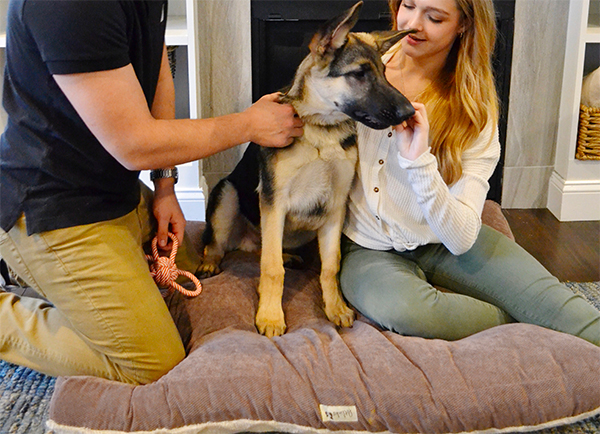
large breed puppy with pet parents

Although there is some minor variation, most veterinarians and pet nutritionists consider a puppy a large breed if they’ll be 55-100 lbs when fully grown. If a puppy will weigh over 100 lbs when fully grown they are considered a giant breed (think Great Danes and Newfoundlands). The Association of American Feed Control Officials (AAFCO) defines a large breed dog as any dog that weighs over 70 lbs when fully grown.

What is different about large breed puppy food?

The main difference is that large breed puppy food has less calories as compared to regular puppy food.

This is because larger breeds are not considered adult dogs until they are 18-24 months old, explains pet nutritionist Mark Finke, PhD.

“The goal is to allow the connective tissue, muscle and bones to grow in proportion with the rest of the puppy.” Finke cautions that “puppy fat” is a misnomer. “Puppy fat is not always cute because in terms of your puppy’s overall health, if they put on too much fat, they are putting extra stress on developing joints and bones which can be detrimental in the long term.” This means that the best way to help your large breed puppy grow into a healthy adult is to feed them a diet that will help them grow more slowly over a longer period of time.

What are some recommended large breed puppy foods?

Puppies usually start to eat some solid food as a supplement to their mother’s milk when they are about four weeks old. By the time they are fully weaned and ready to be adopted at around eight weeks of age.

Once a puppy is around 8 weeks old, we recommend starting your large breed puppy on a high-quality, natural diet that’s specifically formulated to meet their unique nutritional needs.

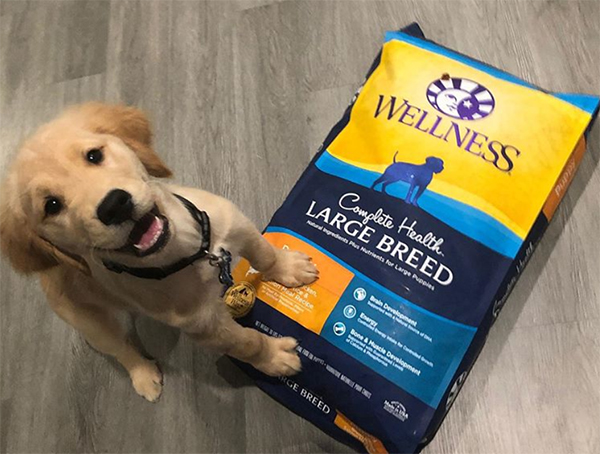
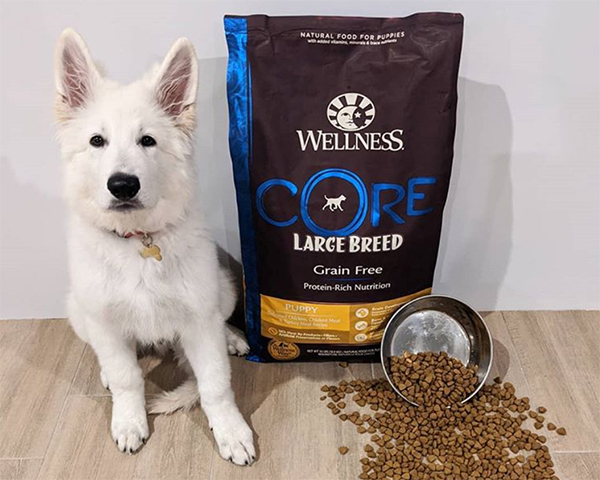
Both our CORE and Complete Health Large Breed Puppy recipes are formulated by taking into consideration the longer growth period of large breed puppies.

According to Finke, a well-balanced diet includes the vitamins and minerals a growing puppy needs, so there is no need to add supplements.

“In fact, doing so can be harmful,” warns Finke. “Giving a puppy too much calcium can interfere with the absorption of other important nutrients such as zinc and copper and could actually cause a nutritional deficiency. Copper is important for cartilage growth and zinc for bone formation,” he explains.

Feeding your large breed puppy the right amounts

When it comes to a feeding regimen, never just fill a food bowl and let a puppy graze. Instead, start your puppy off right by introducing a schedule of controlled feeding amounts as detailed in the feeding guidelines on the packaging. “The recommended feeding guide on the bag asks questions such as how old is your puppy and how heavy is your puppy in order to gauge feeding amount. It’s a good idea to re-check every two months,” suggests Wellness veterinarian Dr. Danielle Bernal. “It’s a guideline, and every dog is different. Use your eye— if you think your puppy is gaining too much weight, reduce the amount by 10 percent.”

At Wellness, we offer a full-time hotline and can offer knowledgeable advice if you have specific nutrition questions. We’re available at 800-225-0904, Monday-Friday, 8 am-5 pm ET.

“It’s important to remember that even large breed puppies have quite small tummies. When they are as young as eight to 12 weeks, they tend to have bursts of energy and then flop and sleep. It’s okay to take the required feeding amount and initially divide it into three or four small meals. But by the time they are 12 weeks old, divide that amount into two meals per day,” advises Bernal.

When measuring food amounts always use a standard measuring cup to measure. Never grab any cup or mug in the kitchen as they usually hold different and arbitrary amounts. Also, be sure that it’s a level cup. Anything heaped is extra food and ultimately will cause a puppy (or an adult dog) to gain weight.

When should I switch my large breed puppy to an adult food?

Because large breed puppies have longer growing periods, they should remain on a puppy formula until they are at least 18 months old, and giant breeds until they are two years old. It’s a good idea to transition slowly over to the adult formula instead of going “cold turkey” from one recipe to another.

Choosing Between Wet And Dry Recipes

Whether you feed kibble, canned food or a combination of wet and dry food is a personal pet parent choice.“Do be careful, though, if you start by feeding wet food only,” warns Finke. “It may be difficult to transition a dog over to dry later. And whatever you decide, always ensure there is a large bowl or dog fountain offering fresh water.”

Finke suggests if you have more than one puppy or dog, to feed them at three to six feet apart and preferably block their view of one another.“This allows them both to eat comfortably and peacefully and will prevent any food aggression or competitive eating problems from developing,” he explains.

Choosing a large breed puppy formula can give your growing dog the best start in life and, feeding the right amounts now, and through adulthood, will ensure that as a beloved family member, he remains a healthy weight with boundless energy for endless fun and games.

Do you have a large breed puppy? Please share your photos with us by tagging #wellnesspetfood and @wellnesspetfood for a chance to be featured on our website or social pages!
Flaked Cat Food: Using Textured Wet Foods for Your Picky Kitty

Flaked Wet cat food

Cats are often labeled picky eaters. In truth, they are not deliberately being difficult; they have very discerning palates! It’s how the food feels in their mouths and the ease with which they can pick it up that attracts them to certain textures over others. While pâté texture wet food is popular with cats, flaked and shredded textures are also feline favorites.

What is flaked wet cat food texture like?

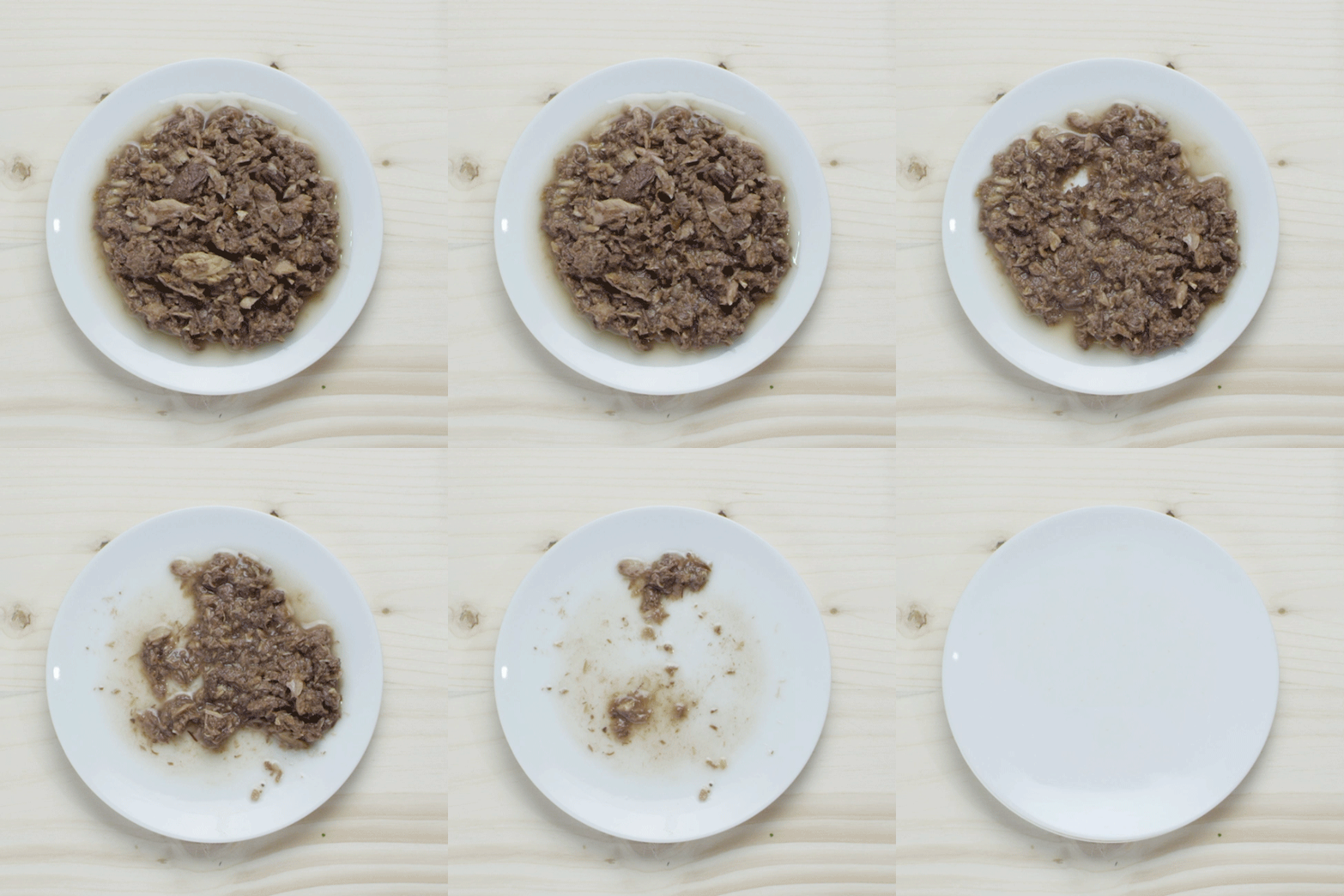
Pet nutritionists, the “feline chefs” tasked with creating nutritionally balanced meals that will appeal in both texture and, of course taste, best describe flaked recipes as the protein presented in long, thin, flat “chipped” pieces of varying sizes in a light broth. Flaked wet cat food has a similar texture to a can of tuna in water—imagine how the fish breaks apart as you separate it with a fork. 


What are some natural options for flaked wet cat food?

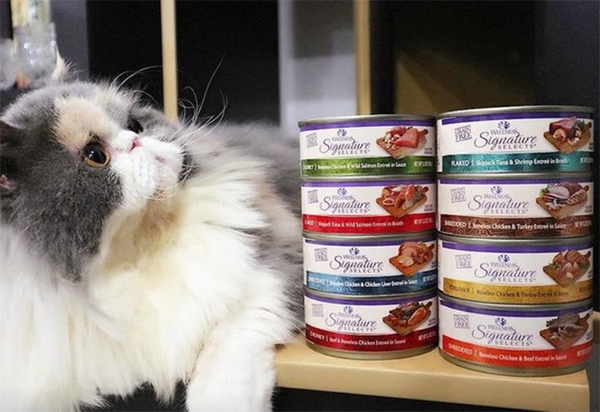
Our Wellness CORE Signature Selects Flaked Skipjack Tuna & Shrimp and CORE Signature Selects Skipjack Tuna & Salmon are natural, grain-free, protein-rich recipes featuring delicate flakes of seafood in a delicious sauce. Each simple recipe is prepared by hand and packed with taste.

Wellness CORE Signature Selects flaked wet cat food

@bambam.bella.emma.lola admiring her CORE Signature Selects options!

How should you feed a flaked wet cat food?

If your cat is used to eating only wet food, getting your cat to try switching to a flaked recipe is as simple as replacing their current wet food with a flaked option. However, if you usually feed dry food or a combination of wet and dry food, you’ll need to consider the total amount of calories your cat is consuming to ensure you are not overfeeding.

Combining Wet & Dry Foods

When combining wet food with dry, decrease the kibble amount to consider the amount of the flaked recipe you are adding to the meal. 

Below is a general recommendation on our flaked recipes on the amount to feed your cat per day based on can size, their weight and whether you are feeding wet food alone or a mix of wet and dry:

급식 지침: Wellness CORE Signature Selects Flaked Skipjack Tuna & Shrimp and CORE Signature Selects Skipjack Tuna & Salmon

Can SizeFeeding AloneFeeding with Dry
2.8 ozAbout 3 to 3½ cans per 6 – 8 lbs of body weight per day Reduce dry by 1/8 cup for every 1 can wet
5.3 ozAbout 1½ to 2 cans per 6 – 8 lbs of body weight per day Reduce dry by 1/8 cup for every½ can wet

Keep in mind that every cat is a little different, so optimal feeding amounts may vary with age, size, activity level, breed and environment. Please use feeding guidelines as an initial recommendation and adjust as needed. Always refrigerate the unused portion.

If you are unsure of the correct amounts to feed according to your cat’s weight and age, our knowledgeable Consumer Affairs team can help you calculate and customize portion sizes. We’re available at 800-225-0904, Monday-Friday, 8 am-5 pm ET.

Customizing the food bowl with a flaked mixer or topper

Another way to try incorporating a flaked texture into your cat’s meals is by adding it as a treat, topper or mixer! Wellness CORE Simply Shreds Flaked Wild Salmon & Tuna and Tuna & Shrimp options are complements to your cat’s full meal that can be served as a “side dish,” or added to your cat’s kibble to make it more enticing. Cats are excellent “nose detectives” and know when you are trying to conceal medication in their food. CORE Simply Shreds also work as a great reward for kitty when she’s taken her medication to remove any the bitter taste from a pill or liquid.

CORE Simply Shreds come packaged in handy pouches and feature four delicious flavor options of Shredded Boneless Chicken, Shredded Boneless Chicken and Mackerel, Flaked Wild Salmon and Tuna and Flaked Tuna and Shrimp. All are served in a light gravy, are grain-free and contain no fillers. CORE Simply Shreds are a great snack in addition to your cat’s regular complete and balanced diet. Remember to feed treats and snacks in moderation.

Consider other wet cat food textures

Apart from flakes and shreds, the Wellness cat food shelf features many other texture options that your cat may enjoy such as pâté, minced and morsels to name a few. Often, it’s a matter of testing to see what appeals the most to your favorite feline. Always consider your cat’s age and her teeth as dental issues can also govern her choices in terms of what is easier to pick up and eat. For more details on how to find a wet food your cat will love, check out Wet Cat Food Textures Decoded: How a Cat Chooses Her Favorite. 

And keep in mind that Wellness has a Catisfaction Guarantee, so if there is something kitty really doesn’t like, you can return it for a refund.

Do you have a cat that enjoys CORE Signature Selects Flaked recipes? Or a kitty that enjoys snacking on CORE Simply Shreds? Please share your photos with us by tagging #wellnesspetfood and @wellnesspetfood for a chance to be featured on our website or social pages!
Big Dog, Tiny Home Living

koda

We don’t have a lot of extra room in our tiny home, but one thing we made sure to include is a space for Koda to play. All of his toys and bed get their own little corner. This gives Koda his own space to do whatever he wants and helps him feel not so cooped up! We also make sure to let him out for lots of breaks to run around in the yard and get out his zoomies!

Koda and I have spent the last three years moving around the country in search of our next adventure. Koda has lived in four homes across three states! Like most millennials, I’ve lived in mostly apartments and have had to adjust to living in a small space with a dog. Since moving back to Washington, we’ve found ourselves out exploring more than ever! Always on the move, we have seriously downsized our belongings and living quarters – we now live in a tiny house! Living in a small studio-style home with a big dog like Koda can seem intimidating, and has definitely taken some adjusting, but we’re figuring out how to live in a tiny home with a big dog.

Not only is Koda big, but he also is full of energy. My biggest tip for living with a big dog in a small space is prioritizing getting out and exploring every opportunity you get!


Taking Koda out into the mountains or to the beach on the weekends allows him to stretch his legs, get some exercise, and (most importantly) wear himself out!

On days we can’t get out to explore, we try to take Koda out to run quick errands with us. Whether it be running to the grocery store, going to pick up some dinner, or stopping into the pet store for a surprise, we try to get Koda out of the house as often as we can so he doesn’t get stir crazy!

Even with all of the adjustments he’s had to make, Koda loves our tiny home.

His constant need to keep a watchful eye on us at all times is easily fulfilled. Although he can’t climb up the ladder and sleep in the loft with us, he knows exactly where we are and is never too far away. Tiny home life can be difficult, especially when you throw a dog into the mix, but with some minor adjustments and prioritizing getting your dog outside to exercise, it can be the best experience and allow you to spend every moment with your best friend!


How to Ski and Snowboard With Your Adventure Dog

kicker

One of the best feelings in the world is being able to include your pup in the activities you’re passionate about. For me, that’s bringing my dog Kicker snowboarding through fresh powder. Snowboarding has been a huge part of my life since I was a kid and now it’s how I make a living. Kicker has been charging through the snow with me basically since the second I brought him home as a puppy.

andrew muse

Photo by: Mark Leblanc

If you want to see pure happiness just watch one of my edits of Kicker and I shredding through freshly fallen snow in the backcountry. That being said, it’s important to properly prepare for your pup’s safety before heading out in the backcountry with them. 

Safety First

andrew & kicker

Photo by: Mark Leblanc

The number one priority is your dog’s well being. That means, that they are happy, warm, hydrated, and not in dangerous terrain. If you aren’t in control when skiing or snowboarding and don’t have experience in the backcountry with avalanche terrain it’s not a good idea to add your pup to that equation. 

•    Make sure you’re on terrain in your ability level.Start simple on a smaller slope going slow, especially if you’re with a puppy. Puppies shouldn’t overexert themselves so, unless you must, only go for a very short day or be prepared to carry your dog (if it’s well within your ability level). Kicker personally loved to be zipped into my jacket as a puppy when we were out for long periods, but l always operated well within my ability level.
•    Avoid avalanche terrain (35+ degrees) unless you are familiar with the best practices and the current snow conditions. Also if you’re in avalanche terrain make sure you have the right equipment (beacon, shovel, etc.) and don’t go alone. 
•    Most importantly, make sure you don’t hit your dog with your edges. Be sure you have control over your equipment at all times because clipping them could result in a life-altering injury and even possibly death. Train your dog to avoid getting too close or running in front of you. 
•    Should an accident happen, be sure you’re in an area you can easily and efficiently carry out your dog and get emergency medical attention. It’s also helpful to carry a small first aid kit with you. 

Ideal Conditions

andrew * kicker

Photo by: Mark Leblanc

Depending on the breed of dog and their tolerance to cold, their fur should protect them and keep them warm in the snow. Regardless, you don’t want to go out on freezing cold days. Snow conditions are important as well. You want a hard base and want to avoid taking your pup when there’s a thick, breakable crust on the snow. They could break through while running and seriously injure their legs. 

•    Make sure there is a packed base layer of snow.
•    Ideally there should be 4-12 inches of fresh snow on top of the base depending on the size of your dog. 
•    If it’s too warm outside the snow tends to clump up in Kicker’s fur which can be uncomfortable for dogs. To prevent this from happening I spray a little cooking spray between his toe pads and on his under belly. This helps the snow slide off. They also have paw balms you can purchase at your local pet store.
•    If it’s going to be chilly or your dog has short hair bring a jacket for the dog or something they can lay on and get off the snow to warm up for a bit. 
•    Bring extra snacks for your pup. When it’s cold we burn more calories and it’s the same for dogs. Kicker loves the CORE 100% Salmon treats and Bowl Boosters! I love them because they’re lightweight and not messy in my pack.
•    Bring water for your pup to drink. Eating snow alone doesn’t hydrate them enough. 

Have Fun


A post shared by Andrew Muse (@andrew__muse) on

The whole goal is to spend time with your pup outdoors having fun. I typically use a split board with skins so I can tour up and then cruise down with Kicker in tow. If it’s a shorter run we’ll make multiple trips up and down, or depending where you are and how many people you’re with, you could do a shuttle with cars. If you can’t ski or snowboard, sledding with your dog is always a fun option as well. However you decide to get outside and enjoy the snow this winter just make sure to stay safe and have a blast!

Follow more of our adeventures on Instagram! @andrew__muse & @kickerdogmuse
 

7 Pet Safety Tips for the Holidays

holiday safety

The Christmas season is the perfect time to eat, decorate, get together and be merry! Remember your furry family member as you plan your celebrations this year. While the holidays are full of cheer, they can also be full of danger for your pet. With a little bit of preparation, however, you and your pets can enjoy a healthy and happy holiday season together!

Top Holiday Safety Tips

1. Protect your tree from your pet, and your pet from your tree.

For many families, it doesn’t feel like Christmas until the tree is up and the lights are lit! Pets may also be transfixed by the allure of the tree. If you’re using a real tree, keep pets away from tree water – it can get stagnant and breed bacteria that’s harmful to your pets. Tree needles are also a hazard – your pet may need surgery if needles are ingested. It’s important to fully secure your tree so your pet can’t knock it over. Consider handing lemon-scented air fresheners in your tree to deter your pet from climbing it. 

2. Deck the halls with pet-friendly décor.

Lights, ornaments, tinsel and other decorations just make everything feel very festive, but are they safe for your pets? Pups and kitties alike may chew on electrical cords. Ornaments can lead to injury if broken or consumed. Consider using battery-powered lights and candles and plastic ornaments to minimize any danger posed to your pets by your holiday décor. 

3. Reconsider decorating with plants.

Poinsettias and other holiday plants such as mistletoe, cedar, holly and pine can add a fun, festive touch to your holiday décor, but did you know that many of these plants are hazardous to your cat or dog? Do some research before bringing those plants into your home. And, as always, have a plan in place to get your pet to the vet if they accidentally ingest any poisonous plants. 

4. Make sure your pet has a place to relax.

The holidays are the perfect time to get together with your friends and family to celebrate the season. Your pet, however, may not appreciate their home being filled with extra love, laughter and cheer. If you plan on having guests over, make sure your kitty or pup has a safe place to go. Prepare a hiding place for a cat. Dogs may enjoy the safety of a kennel or crate. If your pet is especially dismayed at the presence of visitors, consider putting them away in a separate room until the excitement is over

5. Keep human food away from your pets.

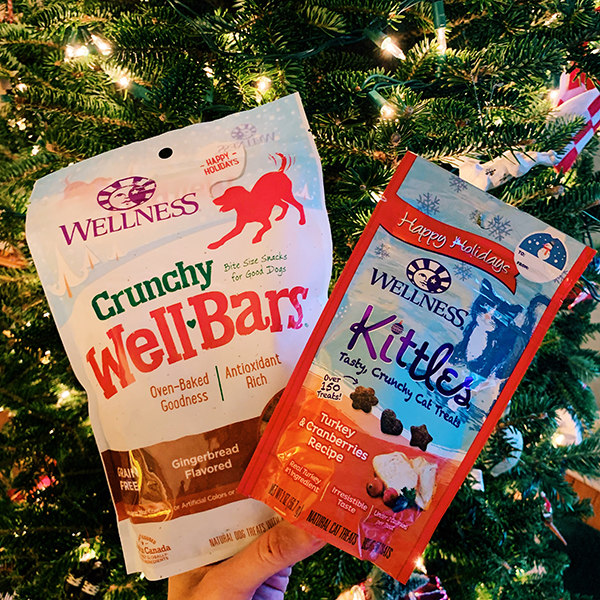
Much to your pet’s dismay, holiday goodies and table scraps may contain ingredients that just aren’t good for them. Some ingredients such as onions, chocolate and xylitol can be toxic to animals. Keep your pet safe by making sure your Christmas cookies, candies, and other foods are out of their reach – and ask your guests to do the same. Want your pet to also enjoy some Christmas goodies? Grab them some holiday treats from Wellness Pet Food – we have fun holiday flavors such as gingerbread for dogs and turkey and cranberries for cats, so your pets can stay healthy while joining the celebration.

6. Wrap up hazards before leaving your home.

You might be tempted to leave your Christmas tree plugged in when you leave the house. After all, pulling into the driveway seeing a lit Christmas tree in the window can give you that warm and fuzzy holiday feeling. If you have pets, however, it’s best to leave that tree unplugged – dogs and cats love to chew on electrical cords. Also, take out the trash before you leave so your pets can’t eat any of your leftover holiday goodies. 

7. Take extra precautions when traveling.

Whether you’re taking your furry family member with you or leaving him behind, it’s important to ensure his safety. If you’re traveling with your pet, check state and international laws to see if you’re required to obtain a health certificate from your vet. Taking a car to the holiday celebration? Make sure your animal is always properly restrained in a carrier or harness. If you’re thinking about boarding a plane with your canine or feline, it’s important to talk to your vet for any air travel tips. Maybe you’re leaving behind your four-legged friend this year – make sure they’re up-to-date with vaccinations before boarding them.

Keeping your pet safe this holiday season means that you and your furry family member can enjoy a happy and healthy holiday season together. Remember to include your cat or dog in the Christmas celebrations this year! Pick up some yummy, wholesome food and treats from Wellness Pet Food. Made with natural ingredients and crafted with your pet’s wellbeing at heart, our treats are the hit of every howliday gathering.

10 Stocking Stuffer Ideas for Pets

For most people, their beloved cats and dogs are more than just pets – they’re family. If you have a four-legged furry family member who you’d like to pamper a bit this holiday season, read below for some stocking stuffer ideas to include your pets in your holiday celebrations.

Top 10 Stocking Stuffer Ideas

1. Dog Toys.
 

dog toys

Kids aren’t the only ones who would be excited to receive new toys for Christmas! Get your dog a new squeaky ball, frisbee or chew toy so they too can enjoy a new toy on Christmas morning. Pet stores always have fun holiday-themed toys if you’d like to keep playtime festive.

2. Cat Toys.

Just like dogs, cats will enjoy seeing a new toy that Santa left in their stocking! Maybe buy your feline friend a new teaser toy, crinkle mouse or jingle ball. If you want to give your cat a bit of a fun challenge, buy a challenge toy – perfect for stuffing with a Wellness Holiday Treat! 

3. Leash or Collar.

Give your animal a new look with a different leash or collar to wear! Look for fun holiday designs so they too can get spruced up and fancy for the holidays along with the rest of the family.

4. Catnip.

Give your kitty the gift that makes cats go crazy – literally. Let your cat go wild and get into the holiday spirit with a new toy or ball filled with catnip. Look for refillable toys so you can keep the catnip fresh. 

5. Clothes.

dog in sweater

Is your furry friend a fashionista? Does your pet get cold or have to wear clothes for other reasons? Do you just think it’s cute to dress them up? Stuff their stocking with a new outfit! Look for fun holiday attire online and in pet stores – just make sure to snap a quick pic of the new outfit before your pet scampers off in her new duds.

6. Grooming Supplies.

Show your puppy or kitten some love with some new grooming supplies to help keep them looking and feeling their best! Maybe your dog could use a new brush to keep his coat looking shiny. Your cat could use some new nail clippers to keep those claws at bay! Shampoo, cleansing wipes and ear cleaner are also great ideas! Your pets will love getting pampered, and you’ll love keeping them clean and healthy.

7. Food & Water Dishes.

We all know how much pets love to eat. Why not buy them a new bowl or dish for them to enjoy their grub and drink out of? Pour the bowl full of yummy Wellness Pet Food, and watch your pet chow down and drink out of shiny new bowls and dishes. 

8. Blanket.

If an animal’s first love is food, sleep is a close second. Cats and dogs alike would love a new blanket to relax on or roll around with. Look for soft, comforting textures to keep your fur baby comfy and relaxed while they drift off to pet dreamland. 

9. Heating Pad.

Animals love to find a place in front of the window to soak up some sun. Don’t let them miss out on that comforting warmth just because the days are shorter. The holidays come with cooler temperatures and less sunlight –  give your four-legged friend his or her very own warm spot! Cats and dogs will love cozying up to a warm heating pad during the coldest days of the year! Make sure to choose a pet-safe heating pad.

10. Holiday Themed Treats.

Show your pup or kitty some extra love this Christmas in the form of special holiday treats. We all love to indulge in seasonal favorites during the holiday season, so why should your pets be any different? With fun flavors such as gingerbread for dogs and turkey and cranberries for cats, your pet will love this special treat, and you’ll love knowing that your pet is getting the very best with Wellness Pet Food. 

holiday treats

Remember to include your cat or dog in the Christmas celebrations this year! If you’re hanging a stocking for your pet by the chimney with care this holiday season, make sure to fill it with wholesome goodies from Wellness Pet Food. Made with natural ingredients and crafted with your pet’s wellbeing at heart, our treats are the hit of every howliday gathering.
 

How to Make an Outdoor Cat House for Winter

As we approach the winter season, the days will get shorter and the temperatures will get colder. Cats might be resourceful, but they still need shelter when the temperatures drop. When the temperatures get really cold, cats can suffer from frostbite or hypothermia. Their fur coats sometimes simply aren’t enough to keep them warm.

Outdoor Shelters for Community or Stray Cats

Building an outdoor cat house for kitties can keep your feline friends safe and warm during the coldest part of the year. You might want to build an outdoor cat house for your indoor/outdoor cat when she chooses to leave your home.

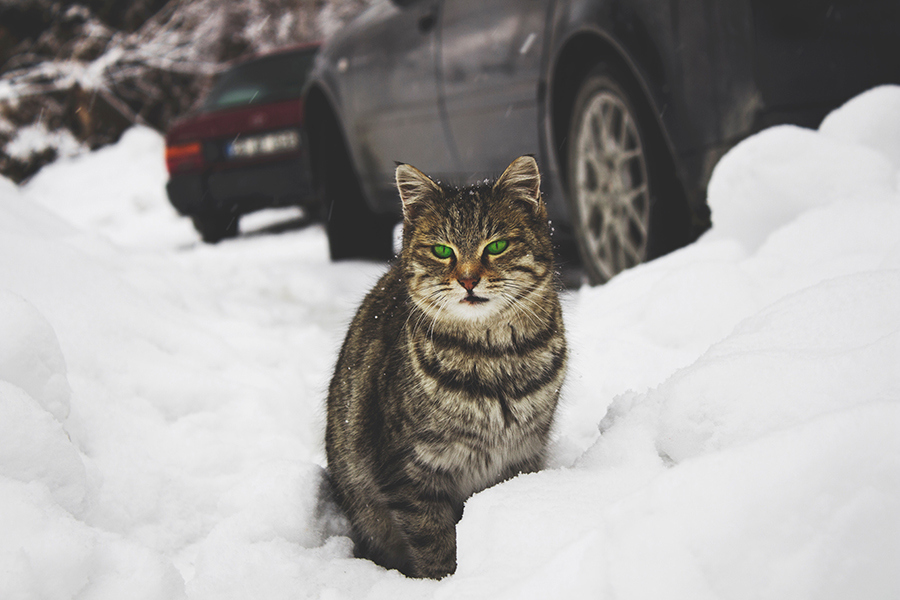
What about the stray and feral cats that hang out around your house? It’s important for cat parents to take care of the animals in their community. While your cat can stay warm and snug inside your home, community cats may not have a place to escape the harsh cold of the winter. Show the stray cats in your community some love this year by providing them with some winter cat houses to keep them warm and comfy during the winter months. Thinking of building a shelter?

Consider The 6 Tips

1. Cats need to feel secure, so make sure you place the feral cat house in a safe area away from other animals and car and foot traffic. 

 2. Also put the outdoor cat winter shelter in a place away from the wind – this will help keep your community cats warm and snug as the temperatures drop. 

3. While you can purchase outside cat houses for winter, making your own can be very inexpensive! Many tutorials are available online that use common household items, or even items that you might throw away. Do you have an old ice chest or large plastic bin? Those can be turned into a feral cat winter shelter by cutting an entry/exit on a side wall. Fill it with some straw so kitties can warm it with their body heat. Just make sure that whatever material you use for the outside of your winter cat shelter is insulated and waterproof. For inside insulation, choose material such as straw, which repels moisture. Blankets and hay soak up moisture and are susceptible to mold. 

Watch these DIY video


4.  Make sure you position your winter cat house off the ground. Adding support under the outdoor cat winter shelter helps keep felines safe from rain or snow. 

5. You should also make sure that the outdoor cat house is the perfect size for your community kitties. The shelter should be large – but not too big. The entrance to the warm cat house also shouldn’t be very big. You don’t want unwanted guests such as dogs or raccoons infiltrating the feral cat winter shelter and scaring off all the cats!

6. If you live in an especially cold area, you may want to make a heated cat house for winter for the stray cats in your community. You can purchase microwavable heat pads that stay warm for a couple of hours. If you have a plug-in nearby, buy some heat pads that are activated by weight, so cats can get some warmth whenever they decide to lounge in the winter cat house.

Check On Your Shelter Regularly

If you decide to make some outdoor cat houses for winter this year for your feline friends, make sure to keep the kitties in your community safe and warm during the colder months.

Check up on the house to make sure that the cats are staying dry. You can invite stray cats to the heated cat house with catnip or treats. If you choose to provide food in your cat house, you can purchase heated outdoor bowls or bowls activated by solar power. You might be the only chance for the stray cats in your community to have a comfortable place to relax from the cold.


Make sure your kitty knows she is appreciated by providing her with the best – and yummiest – food possible. Show some extra love to your cat by giving them some wholesome goodies from Wellness Pet Food. Made with natural ingredients and crafted with your pet’s well being in mind, our treats are the perfect way to show your feline that they have a special place in your heart.

Should I Buy a Dog DNA Test?

dog dna test

DNA tests are all the rage these days. Using simple, at-home test kits, people are able to discover where they are from and who they are related to. Did you know that the same kind of kits exist for your pup? While many people use DNA tests to discover who they are, pet owners may also want to learn who their pets are! A multitude of companies now sell dog DNA-testing kits to help you discover just what kind of dog you have.

Since December 2 is National Mutt Day, you might be trying to think of a special way that you can celebrate your unique dog and how special he is to you. Perhaps buying a dog DNA test would be a great way to learn more about your favorite canine companion. Your dog is a part of your family and knowing where he comes from can strengthen that bond! Continue reading for more information to see if dog DNA testing is right for you and your tail-wagging best friend.

Reasons for Considering a Dog DNA Testing Kit

Do you consider your dog to be a mixed breed or “mutt”? Do you ever wonder about what kind of dog you have? Are you curious about what mix of breeds makes your dog so unique?

Well, you don’t have to be curious anymore! Dog DNA tests are definitely a great way to discover your dog’s family tree. In addition to breed identification, dog DNA tests can also screen for ancestry, traits and disease risk. Tests can be purchased online or at pet supply stores. Most kits that are available for purchase test DNA through a cheek swab. If you’re interested, a more expensive kit that tests your dog’s blood is available at some veterinarian offices. 

Identify Health Issues

In addition to learning more about which breeds your dog comes from, dog DNA tests can be helpful in identifying potential health issues. Some breeds are more prone to developing certain health issues than others, such as cataracts in Cocker Spaniels or hip dysplasia in Basset Hounds. Once you learn your dog’s predominant breeds, you can take your findings to your veterinarian to discuss the best healthcare route for your dog. Knowing which potential health issues your dog may encounter means that you and your vet can keep watch and hopefully catch those issues before they get too serious. Your dog is special to you, and you want to keep him around as long as possible!

Anticipate Your Dog’s Lifestyle Needs

You can use a dog DNA test on pups of all ages but using a dog DNA test on your puppy can help you learn what to expect as he grows older. For example, if you know your puppy’s predominant breeds, you’ll know personality traits he might have or how big he will grow. If your dog is predominantly Siberian husky, you’ll know that he needs a big yard and lots of playtime to keep him happy and healthy. If he’s mostly an English bulldog, your pup will be just fine living in an apartment with minimal exercise. 

A Fairly Inexpensive Venture

Still on the fence about swabbing your dog’s cheek to learn more about his origin? Kits are fairly inexpensive, starting around $50. Just make sure you do your research, because not all dog DNA tests are created equal. The more expensive kits tend to scan for more breeds, which means your results will probably be more accurate. Some companies also include a detailed health report that you can take to your vet.

What are some popular dog DNA kit testing options?

Wisdom Pannel : Wisdom provides you with your very own customized, online report with our genetic analysis of your dog’s ancestry, weight, physical traits, up to 150+ health conditions and much more!

Embark: Embark screens for over 250 dog breeds. Using a research-grade genotyping platform developed in partnership with Cornell University College of Veterinary Medicine, Embark offers the most accurate breed breakdown on the market.

OrivetThe Orivet Health Screen is an effective DNA test kit for dogs. It screens any dog for dozens of diseases and traits and also runs the Orivet proprietary algorithmic analysis for your canine friend, creating a Life Plan based on their breed, age, weight, gender, lifestyle and geographic location.

Your Pup is One of Kind

Pamper your pooch this National Mutt Day by learning more about his history and discover what makes him so special! Regardless of your dog’s pedigree, keep them happy and healthy with quality food from Wellness Pet Food. From Chihuahuas to Great Danes and every mix in between, you can be sure that your dog is taken care of, since our food and treats are made with natural ingredients and crafted with your pet’s well being at heart!


Three Healthy Holiday Treats That Your Dog Will Love

best friends treats

How do you celebrate the holidays? Many of us come together to share time and tasty food with family and friends. The aromas of Thanksgiving feasts and delicious baked goodies fill our kitchens and warm our hearts. This holiday season, why not show your best furry friends a little extra love and include them in the feast?

Recipes Fido will love

Our friends at Best Friends Animal Society put on their aprons and baker’s hats to make Fido’s taste buds sing. Here is a recipe that BriAnne Figgins, manager of Best Friends’ Angel Village café and Canyon Grill whipped up in the village kitchen using our NEW Wellness CORE Bestie Bars, chicken and carrots recipe.

The treats have adorable sayings on them, such as “U + Me,” “Love” and “BFF,” but for our recipe, we’re going to crush them up to make a drool-worthy pie crust!

Mini Pumpkin Pie Dog Treats

Bestie Bar pumpkin pie dog treats
Prep and assembly time: Seven minutes
Cook time: Eight minutes
Total time: 15 minutes
Yield: 24 small pies and one to 24 very happy dogs

Ingredients for the crust
One bag (eight ounces) of Wellness CORE Bestie Bars, chicken and carrots recipe
½ cup oats
½ to 1 cup unsweetened applesauce

Directions
Preheat oven to 350 degrees
Place Wellness CORE Bestie Bars in a food processor or blender and pulse until very crumbly.
Add in the oats and enough applesauce to make the mixture slightly moist.
Mold the pie crust mixture into a nonstick (or lightly greased) muffin tin. (Depending on the size of the muffin tin, the recipe can make up to 24 minipies.)
Bake at 350 degrees for eight minutes.
Remove from the oven and allow to cool.

Ingredients for the filling
Two cups canned pumpkin (This should be plain pumpkin puree, not sweetened or spiced.)
½ cup peanut butter (creamy or chunky)

Directions
Mix pumpkin and peanut butter together until smooth.
Scoop into cooled pie crusts with a spoon or spatula.
Serve and watch Fido and his friends enjoy.

Chef BriAnne in front of Bestie Bar pumpkin pie dog treats

How did the dogs like them? A few lucky office dogs at the Sanctuary, who served as taste testers, sampled several treats each and gave their approval with lots of tail-wags. BriAnne also says, “I gave one to each of my dogs, and they loved them. This recipe is really quick, easy and worth every minute to have the entire family together for pumpkin pie.”

The fun didn’t end there. Next up in the Angel Village café kitchen: peanut butter cupcakes, adapted from this recipe from “the fitchen”.

Peanut Butter Pup-Cakes

Bestie Bar cupcake dog treats
Prep and assembly time: 15 minutes
Cook time: 40 minutes
Total time: 55 minutes
Yield: 24 very cute “pupcakes” using a minimuffin tin

Ingredients for the cake base
1 cup oat flour
1/2 cup quick oats
1/4 cup agave syrup
1/4 cup peanut butter (Make sure you choose xylitol-free peanut butter.)
1/4 cup unsweetened apple sauce
1 teaspoon baking soda
1/4 teaspoon cinnamon

Directions
Preheat oven to 350 degrees and lightly grease muffin tin.
In a large bowl, whisk together dry ingredients.
Add agave, peanut butter and apple sauce and stir until well-combined.
Fill the muffin tin three-quarters full, bake 12-15 minutes and allow to cool

Ingredients for the frosting
1 cup sweet potato, boiled
1/2 cup coconut cream

Directions
Peel sweet potato and chop into small cubes.
In a medium pot, bring four cups of water to boil.
Add chopped sweet potato.
Boil 20 minutes or until very tender.
Drain and allow to cool.
In a medium bowl, combine sweet potato and coconut cream and beat until smooth.
Once the pupcakes are cooled, top with the frosting and serve.

After pie and cupcakes, BriAnne wanted to create some more traditional dog treats. To do so, she used this recipe from damndelicious.net.

Spinach, Carrot and Zucchini Dog Treats

Spinach, carrot and zucchini dog treats
Prep and assembly time: 30 minutes
Cook time: 18-25 minutes (Time will vary based on the size and shape of the treats, as well as how crunchy you’d like them.)
Total time: 55 minutes
Yield: This will depend on how thin or thick you make the cookies and the size and shape of your cookie cutter

Ingredients
1 cup pumpkin puree
1/4 cup peanut butter
2 large eggs or (if preferred) egg substitute
1/2 cup old-fashioned oats
3 cups whole wheat flour (more if needed)
1 carrot, peeled and shredded (Using a food processor to shred and chop the veggies will reduce prep time.)
1 zucchini, shredded
1 cup baby spinach, chopped

Directions
Preheat oven to 350 degrees. Line a baking sheet with parchment paper or lightly grease the cookie sheet.
Use an electric mixer and beat the pumpkin puree, peanut butter and eggs on medium high until well combined (one to two minutes).


Gradually add oats and 2 1/2 cups flour at low speed, beating just until incorporated. Add additional flour (1/4 cup at a time) just until the dough is no longer sticky. Add carrot, zucchini and spinach, beating just until blended.Working on a lightly floured surface, knead the dough until it comes together. Using a rolling pin, roll the dough to desired thickness. Using cookie cutters, cut out shapes and place onto the prepared baking sheet.Place into oven, bake until edges are golden brown and then allow to cool.


Find Fido (if he’s not already in the kitchen, eagerly awaiting your latest creation) and reward him for being such a faithful friend.

“We didn’t change anything about this recipe,” BriAnne says. “But it can be modified for your dog. You can use different-sized cookie cutters, depending on the size of your dog. You can make them thinner or bake them a bit longer if you want them to be crunchier. You can also bake for a shorter time if you want them to be softer — say for older dogs with dental problems. It’s kind of fun to make them more personal.”

Ready to make your own? Shop Wellness CORE Bestie Bars here: https://shop.bestfriends.org/products/wellness-core-bestie-bars

Mona the dog eating a Bestie Bar pumpkin pie treat

Photos by Molly Wald


* This article was originally posted on Best Friends Animal Society : bit.ly/BestFriendsTreats.

About This Page

Topic:

Diet 건강 관리 및 맞춤 영양 식단

Date:

26/11/2019

    Be the best pet parent you can be. Join for expert advice.

    Sign Up